


Table of Contents
- How to Verify Attorney Bar Status and Credentials
- Understand the Difference Between Attorneys and Accredited Representatives
- Common Immigration Legal Scams to Avoid
- What to Expect During an Immigration Consultation
- Finding Pro Bono and Low-Cost Legal Help
- Steps to Evaluate and Choose Your Immigration Counsel
- Due Diligence: Vetting Your Potential Immigration Counsel
- Frequently Asked Questions
Last Updated: August 31, 2026
How to Verify Attorney Bar Status and Credentials
Finding reputable immigration counsel starts with verification. Before you trust an attorney with your case, confirm they’re actually licensed to practice law in your state. This single step eliminates fraudulent operators and protects you from costly mistakes.
Check State Bar Association Directories
Your state bar association maintains a public database of every licensed attorney. Visit your state bar’s official website and search for the attorney by name. The directory will show current license status (active, inactive, or suspended), bar admission date and jurisdiction, disciplinary history summary, and contact information on file.
For attorneys serving clients across state lines, verify licensing in every state where they claim to practice. An attorney licensed only in Arizona cannot represent you in federal immigration court proceedings without proper admission (uscourts.gov). If an attorney isn’t listed, they’re not licensed. Walk away immediately.
Review Disciplinary Records and Complaints
A clean license doesn’t tell the whole story. Most state bars publish disciplinary records online. Search for the attorney’s name and review any public sanctions, suspensions, or disbarments. Pay attention to the nature of complaints: client trust account violations, failure to communicate with clients, case abandonment, fraudulent billing practices, and unauthorized practice of law. These records reveal patterns, multiple complaints suggest a systemic problem.
Contact your state bar’s disciplinary hotline if you can’t find information online. Bar staff can tell you whether an attorney is currently under investigation, even if the case hasn’t been publicly resolved yet.
Understand the Difference Between Attorneys and Accredited Representatives
Not everyone who offers immigration legal services is an attorney. The distinction matters enormously for your case.
Attorneys hold a law degree, passed the bar exam, and maintain an active license in at least one state. They can represent you in immigration court, file appeals, and make strategic legal decisions.
Accredited representatives are non-lawyers who have passed a test administered by the Department of Justice and are authorized to represent clients before U.S. Citizenship and Immigration Services (USCIS) and the Board of Immigration Appeals. They cannot appear in immigration court and cannot handle certain case types.
A notario publico (common in Spanish-speaking communities) is a public notary, not a lawyer. They can witness signatures and certify documents but cannot provide legal advice or represent you in any proceeding. Many immigration scams target Spanish-speaking immigrants by misrepresenting notarios as immigration lawyers.
If someone claims to offer immigration representation without being an attorney or accredited representative, they’re practicing law illegally. Report them to your state bar. Accredited representatives are legitimate options for USCIS matters like green card applications or naturalization petitions. For court proceedings or complex cases, you need an attorney. Ask directly: “Are you a licensed attorney or an accredited representative?”
Common Immigration Legal Scams to Avoid
Immigration fraud is rampant. Scammers prey on fear, language barriers, and desperation. Knowing the warning signs protects you.
Red Flags of Fraudulent Immigration Services
Guaranteed outcomes. No legitimate attorney can guarantee approval of an immigration petition or visa application. An attorney who promises “100% approval” or “guaranteed green card” is lying.
Cash-only payments with no receipt. Legitimate law firms provide written fee agreements, itemized invoices, and professional payment methods. Scammers demand cash, often in person, and give no documentation.
Pressure to pay upfront. Reputable attorneys charge retainer fees or hourly rates. They don’t demand the full case fee before starting work.
No written agreement. Every legitimate attorney-client relationship involves a written fee agreement explaining costs, scope of work, and billing practices.
Claims to have “special connections” or “inside access.” Immigration decisions are made by government officials following law and regulation. No attorney has back-channel influence.
Pressure to sign documents without explanation. Your attorney must explain every document you sign.
Lack of professional office or communication. Legitimate law firms have offices, phone numbers, and email addresses. They return calls within 24 hours.
Notario Publico and Unauthorized Practice of Law
The notario publico scam exploits cultural and language differences. In many Latin American countries, a notario publico is a highly trained legal professional similar to an attorney (oas.org). In the United States, a notary public is a person authorized to witness signatures and certify documents only. They have no legal training, cannot provide legal advice, and cannot represent you in any proceeding.
Unauthorized practice of law is a crime and a federal offense when it involves immigration matters (justice.gov). Report unauthorized practice to your state bar association immediately. Document the person’s name, location, and what services they offered.
What to Expect During an Immigration Consultation
A consultation is your first meeting with an attorney to discuss your case. A typical consultation lasts 30 minutes to an hour. The attorney will ask detailed questions about your immigration history, family situation, employment, criminal record (if any), and specific immigration goals. Bring documents: passport, visa stamps, employment letters, birth certificate, marriage certificate, and any previous immigration paperwork.

The attorney will explain your options in plain language, identify potential obstacles, and discuss realistic timelines and fees. A good attorney acknowledges uncertainty and won’t pretend to know outcomes they can’t control. You should ask questions freely. If they rush you or seem annoyed by questions, that’s a red flag.
At the end, the attorney will either offer to represent you or decline the case. This honesty is a sign of integrity.
Questions to Ask During Your Initial Consultation
What is your experience with cases like mine? Ask specifically about visa type, family situation, or criminal history. An attorney who has handled dozens of similar cases knows the pitfalls.
What is your assessment of my case? They should give you an honest evaluation of what’s strong, what’s risky, and what documents you need.
What are the costs? Ask for a written fee agreement. Understand whether you’re paying hourly, a flat fee, or a retainer.
How long will this take? An attorney should give you realistic expectations.
How will we communicate? Ask how often they’ll update you, how you’ll reach them, and their response time.
What are the risks? A good attorney explains worst-case scenarios and how they’d handle them.
Will you handle my case personally? If the attorney will assign your case to a paralegal or junior attorney, you need to know.
What happens if my case is denied? Ask about appeals, alternative strategies, and next steps.
Understanding Fee Agreements and Retainer Arrangements
Fee agreements protect you and the attorney. A flat fee is a set price for a specific service. An hourly rate means you pay for time spent on your case. A retainer agreement means you pay an upfront deposit that the attorney deducts hours against.
A good fee agreement includes total cost or hourly rate, what services are included, what costs extra (court filing fees, expert witnesses, translation services), payment schedule, refund policy, and what happens if the case costs more than estimated. Never sign a fee agreement you don’t fully understand.
Finding Pro Bono and Low-Cost Legal Help
Immigration representation is expensive. If cost is a barrier, legitimate low-cost and free options exist.
Legal aid organizations provide free or low-cost immigration services to low-income immigrants. Search “[your state] immigration legal aid” or contact your state bar association for a referral. Many legal aid agencies have income limits and long waitlists.
Law school clinics at accredited law schools offer free immigration services supervised by licensed attorneys. Quality is high because faculty oversee cases carefully.
Bar association referral services connect you with attorneys who offer reduced fees or sliding-scale rates based on income.
Non-profit immigration organizations like RAICES, CARA, and local immigrant advocacy groups sometimes provide free legal consultations or referrals to pro bono attorneys.
A competent legal aid attorney is vastly better than a scammer charging high fees.
Steps to Evaluate and Choose Your Immigration Counsel
Selecting an attorney is one of the most important decisions you’ll make. Take time with this decision.
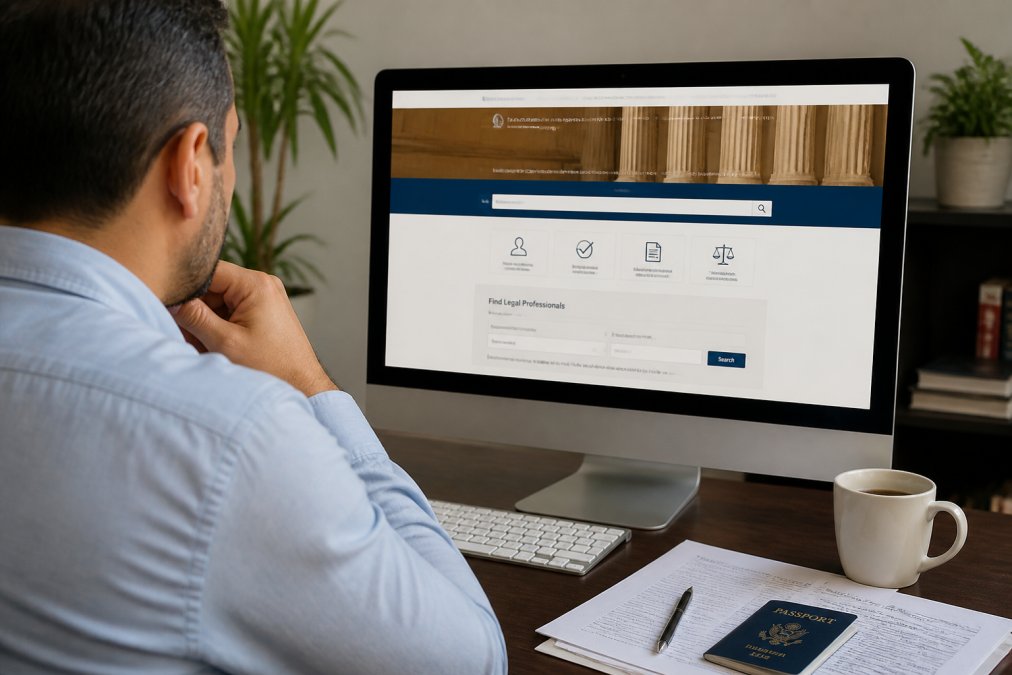
Step 1: Verify credentials. Search the state bar directory. Confirm the attorney is licensed and has no disciplinary history.
Step 2: Check specialization. Immigration law is broad. An attorney who specializes in family immigration may not be the right fit if you need removal proceedings. Ask about their specific experience with your case type.
Step 3: Interview multiple attorneys. Talk to at least three. Compare their assessments, fees, and communication style.
Step 4: Assess communication. Do they explain things clearly? Do they answer your questions? You’ll be working closely with this person.
Step 5: Verify references. Ask for names of recent clients you can contact. Call them and ask about the attorney’s competence, responsiveness, and integrity.
Step 6: Review the fee agreement carefully. Understand every cost before you sign.
Step 7: Trust your instincts. If something feels off, it probably is.
Assessing Specialization for Your Visa Type or Case
Ask the attorney directly: “How many cases like mine have you handled in the last two years?” A specific number suggests genuine expertise. Ask about their success rate with your case type. Specialization matters, a generalist attorney is less experienced than someone who focuses exclusively on immigration.
Checking References and Client Reviews
Ask for references from clients whose cases are similar to yours. Call them and ask whether the attorney delivered what they promised, how responsive they were, whether the case cost more than estimated, and whether you’d hire them again.
Online reviews on Google, Avvo, or the state bar website provide broader perspective. Read recent reviews carefully. A pattern of complaints about communication, billing, or competence is a serious warning sign. What matters is how the attorney handled problems and whether clients felt respected and informed.
Due Diligence: Vetting Your Potential Immigration Counsel
Before you sign a fee agreement, conduct thorough due diligence. Call your state bar and ask whether the attorney has pending complaints or investigations. Search the attorney’s name online for news articles, court records, or complaints.
Visit the attorney’s office if possible. Is it professional? Are they organized? Do staff seem competent?
Ask for a written list of references with contact information and case types. Call at least three and ask detailed questions.
Request a sample fee agreement from another client (with names redacted). Compare it to what they’re offering you.
Ask about malpractice insurance. Reputable attorneys carry professional liability insurance.
Trust your judgment. If an attorney makes you uncomfortable or you feel pressured, keep looking. The right attorney will be patient, clear, and confident without being arrogant.
Finding reputable immigration counsel requires time and careful evaluation, but it’s the most important investment you can make in your case. A skilled attorney protects your rights, explains your options clearly, and guides you through complex processes. At Kanu & Associates, P.C., we understand the stakes, immigration decisions shape your family’s future. Our team specializes in immigration law across Arizona and New Mexico, providing honest assessment of your situation and practical guidance you can trust. When you’re ready to move forward with confidence, contact us to discuss your case and explore how we can help you succeed.
Frequently Asked Questions
How can I verify if an immigration lawyer is licensed and in good standing?
Visit your state bar association’s online directory and search the attorney’s name. The directory will show their license status, any disciplinary actions, and their areas of practice. You can also contact the bar association directly by phone. Always verify current license status before hiring, an attorney without an active license cannot legally represent you in immigration matters.
What is the difference between an immigration attorney and a notario publico?
An immigration attorney is a licensed lawyer who has passed the bar exam and can provide legal advice and representation in court. A notario publico (notary public) can only witness signatures and certify documents, they cannot give legal advice or represent you in immigration cases. In many countries, ‘notario’ means lawyer, which causes confusion. In the United States, hiring a notary for immigration help is unauthorized practice of law and puts your case at serious risk.
What red flags should I watch for to avoid immigration legal scams?
Avoid anyone who guarantees approval of your case, demands cash-only payment, discourages you from reading documents, or claims to have special connections with immigration officials. Legitimate immigration counsel will explain the risks, provide a written fee agreement, and encourage you to ask questions. Be wary of services advertised by non-lawyers and always verify credentials through the state bar association before paying any fees.
What questions should I ask during an initial immigration legal consultation?
Ask about their experience with your specific visa type or case, how they charge (hourly, flat fee, or retainer), what the likely timeline is, and what outcomes are realistic. Request a written fee agreement before signing anything. Ask how they will communicate with you and how often you can expect updates. A reputable attorney will answer all questions clearly and not pressure you to decide immediately.
This article was written using GrandRanker