


Table of Contents
- Why Hiring an Immigration Attorney for Naturalization Matters
- Understanding Naturalization Eligibility Requirements
- How to Avoid Naturalization Application Mistakes
- Getting Help with Form N-400 and Documentation
- Working with a Naturalization Interview Lawyer
- Cost Considerations and What to Expect
- Deciding Whether You Need Legal Representation
- Conclusion
- Frequently Asked Questions
Last Updated: October 9, 2026
Why Hiring an Immigration Attorney for Naturalization Matters
Becoming a U.S. citizen through naturalization is one of the most significant decisions an immigrant can make. The process involves submitting Form N-400, attending a citizenship interview, and demonstrating eligibility under federal law.
The benefits of hiring an immigration attorney for naturalization extend far beyond filling out forms.
This guide covers the concrete advantages of working with a naturalization lawyer and whether representation makes sense for your situation.
Understanding Naturalization Eligibility Requirements
Naturalization eligibility depends on strict federal requirements: you must have held a green card for a specific period (usually five years, or three years if married to a U.S. citizen), maintained continuous residence, demonstrated good moral character, and shown basic English proficiency and civics knowledge.
A common mistake is assuming you meet the residency requirement without calculating absences. Another frequent issue is “good moral character”: if you have criminal history, immigration violations, or unpaid taxes, an attorney assesses how these factors affect your case and develops a strategy to address them.
Some applicants face more complex circumstances. If you’ve had immigration violations, prior deportation proceedings, or documentation gaps, an attorney’s guidance becomes essential, explaining which issues are manageable and which require extra preparation before filing.
How to Avoid Naturalization Application Mistakes
The Form N-400 is deceptively detailed. Questions about travel, employment, family relationships, and legal status require precise, consistent answers.
Common filing errors include:
- Providing incomplete travel documentation or underestimating time spent outside the U.S.
- Failing to disclose prior immigration proceedings or visa violations
- Submitting documents with missing signatures, dates, or certifications
- Listing incorrect information about dependents or family relationships
- Omitting required supporting documents like tax returns, employment verification, or police clearances
An immigration attorney reviews your entire application before submission, cross-referencing answers against supporting documents.
An attorney also organizes supporting documents in the format USCIS expects. Wrong ordering, missing translations, or improper certification can delay processing; an attorney knows the standards and ensures your file meets them.
Getting Help with Form N-400 and Documentation
The N-400 requires documents proving eligibility and good moral character: your green card, passport, birth certificate, marriage certificate (if applicable), tax returns, employment letters, and police clearances from every place you’ve lived.
An immigration attorney guides you through documentation step by step: which documents you need, how to obtain certified copies, and translation requirements.
The attorney also helps you understand what USCIS means by “good moral character” and which documents best demonstrate it.
Working with a Naturalization Interview Lawyer
The citizenship interview is where USCIS officers verify eligibility, test English proficiency, and assess civics knowledge. Many applicants underestimate preparation, assuming a truthful N-400 makes the interview straightforward.
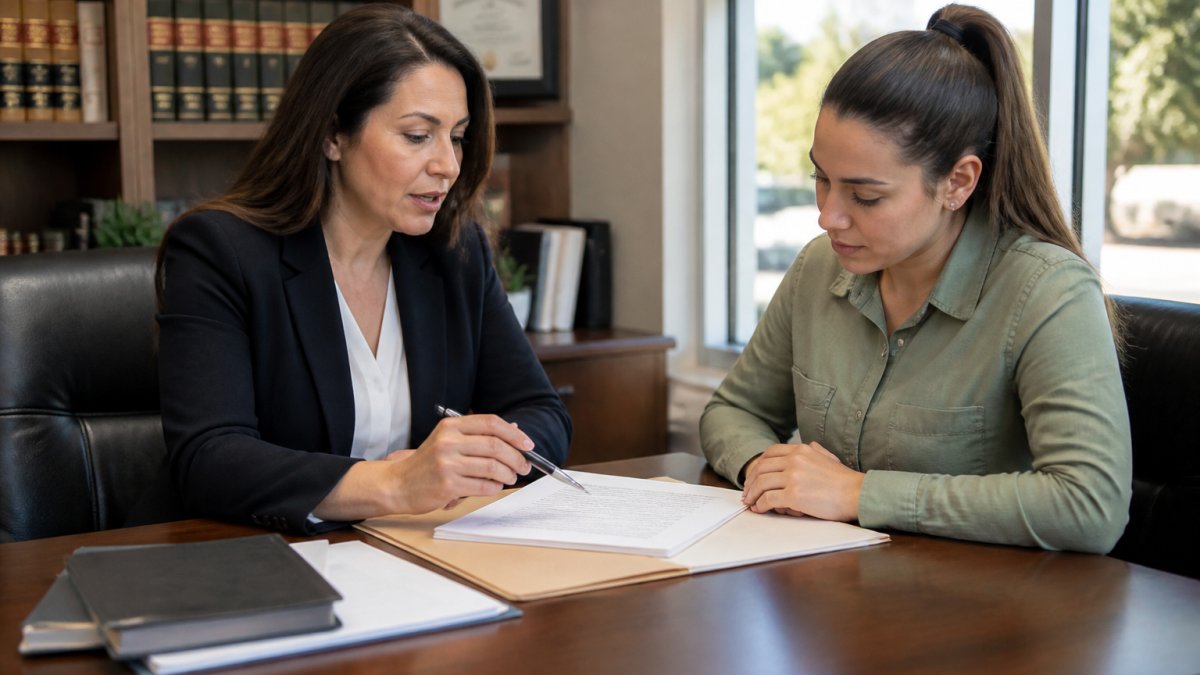
A naturalization interview lawyer prepares you for every aspect of the interview: mock interviews with typical USCIS questions, review of the 100 civics questions, and readiness for the English proficiency assessment.
The attorney also attends your actual citizenship interview. Legal representation signals to USCIS that your application was carefully prepared.
Cost Considerations and What to Expect
Most pages about hiring a naturalization attorney discuss benefits but never money. Here is the honest version.
The two costs are separate
Your total outlay has two distinct parts, and conflating them is the most common budgeting mistake:
- USCIS filing fee for Form N-400. This is a government fee paid directly to the Department of Homeland Security, not to your lawyer. USCIS adjusts it by rulemaking, and the amount differs depending on whether you file on paper or online and whether you are applying on the basis of military service. Because the fee changes, verify the current amount on the official USCIS Form N-400 page and the USCIS fee schedule before you budget, do not rely on a number you saw in a blog post or a forum thread.
- Attorney fees. This is what your lawyer charges for the work on your case. It is not set by USCIS, not set by any state bar, and not standardized across firms.
What actually drives the attorney fee
Most immigration practices scale the quoted fee with the attorney time your file will realistically consume. The biggest variables are:
- Case complexity. A clean five-year case with continuous residence, no arrests, and complete records takes far less time than a case with a prior removal order, a dismissed charge, or a long absence that needs legal analysis.
- Number of prior immigration filings. Every prior application, petition, or appeal has to be reviewed for consistency with the N-400.
- Document problems. Missing police clearances, foreign-language records needing certified translation, or tax transcripts that must be requested from the IRS all add hours.
- Whether the attorney attends the interview. Representation at the USCIS interview is a separate line of work from application preparation, and some firms price it separately.
- Whether an RFE or denial has to be answered. Post-filing work is usually billed outside the original flat fee.
Flat fee versus hourly
Many practices quote a flat fee for routine cases because the scope is predictable; hourly billing is more common when the scope is unknown. Ask which model applies and what is included. A written engagement letter should state the scope, the fee, and what triggers additional charges.
The cost of getting it wrong
A denial is not just an emotional setback. It means paying the USCIS filing fee again, re-gathering documents, and waiting through a new processing queue. If the denial involved a misrepresentation finding, the consequences are more serious than a delay. That asymmetry, modest preparation cost versus re-filing cost plus lost time, is the real cost-benefit argument most pages skip.
Before you compare quotes, separate the government fee from the legal fee, ask what the flat fee covers, and ask in writing what happens to the price if USCIS issues a Request for Evidence. Those three questions will tell you more than the headline number.
Where to verify current numbers
Because both the USCIS fee and market rates change, use primary sources rather than this page for dollar figures:
- USCIS Form N-400, Application for Naturalization, current filing fee and instructions
- USCIS fee schedule and filing fee updates
- USCIS processing times for Form N-400 by field office
For attorney pricing, the only reliable source is a direct quote from the firm after a consultation, because the fee depends on facts only your file reveals.
Deciding Whether You Need Legal Representation
Here is a framework you can apply.
Step 1: Sort your case into one of three buckets
Bucket A, Likely fine on your own. You have held a green card for the full statutory period with no absence approaching six months, no arrests or citations, no denied or withdrawn immigration applications, all tax years filed, and you are comfortable completing a detailed federal form in English.
Bucket B, Get a consultation, then decide. You have one or two issues that are probably explainable but that you are not sure how to document. Examples specific to naturalization:
- A single trip abroad of five to six months, or several shorter trips that together raise a continuous-residence question.
- A dismissed or expunged charge, a diversion program, or a citation you did not think counted.
- A prior N-400 or green card application where you answered a question differently than you would now.
- Unfiled tax returns, a payment plan with the IRS, or a dependent you did not claim.
- A name discrepancy across your passport, green card, and birth certificate.
Bucket C, Do not file without counsel. You have a prior removal order, an outstanding immigration court case, a criminal conviction that could implicate a deportability ground, a prior finding of misrepresentation, or you have already received a Notice to Appear.
Step 2: Understand why naturalization is different from other immigration filings
The N-400 asks you to certify your entire history under penalty of perjury, and USCIS has your prior file. An inconsistency between what you write now and what you wrote years ago is visible to the officer. That is why facts harmless in a green card context can become a good moral character issue in naturalization. An attorney’s value is reconciling your history before you sign.
Step 3: Verify who you are actually hiring
This step matters more than any other.
- Only a licensed attorney or an accredited representative can give you legal advice about your case. In the United States, that means a member of a state bar, or a representative accredited by the Department of Justice through a recognized organization.
- “Notario publico” and “immigration consultant” are not the same as an attorney. In many countries a notario is a lawyer; in the United States a notary public cannot practice law or advise you on immigration. Paying a consultant for legal advice is unauthorized practice of law and can damage your case.
- Check the license yourself. Every state bar maintains a public member directory. Search the attorney’s name, confirm active status, and check for discipline history.
- Confirm the firm is who it says it is. Ask for the attorney’s bar number, and if the firm advertises a specialty, note that only some state bars certify immigration specialists.
- Never sign a blank form or a form you have not read. If a preparer asks you to sign an incomplete N-400, walk away.
If someone promises a specific outcome, guarantees approval, or tells you not to disclose an arrest because “it was expunged,” that is a signal to stop and get a second opinion from a licensed attorney. The N-400 asks about arrests, not just convictions.
Step 4: Use the consultation to test the attorney, not just your case
A good consultation should end with you understanding three things: whether you are eligible now, what in your history could cause a problem, and what the attorney would do about it. If you leave without those answers, keep looking. Ask how the attorney handles RFEs, whether they attend interviews, and who will handle your file.
A short self-assessment
If you answer yes to any of these, a consultation is worth the time:
- Have you ever been arrested, cited, or detained, including as a juvenile?
- Have you taken any trip outside the United States of six months or longer since becoming a permanent resident?
- Have you ever failed to file a required federal, state, or local tax return?
- Have you ever claimed to be a U.S. citizen in writing or to a government official?
- Has any prior immigration application of yours been denied, withdrawn, or abandoned?
- Are you unsure whether any of the above applies to you?
That last question is the honest one. Uncertainty about your own history is itself a reason to have a licensed attorney review it before you file.
Conclusion
The benefits of hiring an immigration attorney for naturalization go beyond paperwork preparation.
If you’re considering naturalization and want to understand whether legal representation is right for you, contact Kanu & Associates, P.C. for a consultation.
Naturalization is a significant milestone in your immigration journey. The right legal guidance can mean the difference between smooth approval and months of delays. Kanu & Associates, P.C. understands the naturalization process and the challenges many applicants face.
Frequently Asked Questions
Do I need an immigration attorney to apply for naturalization?
You are not required to hire an attorney to file for naturalization. Many applicants with straightforward cases file the N-400 application independently. However, an immigration attorney can identify errors before submission, explain eligibility requirements specific to your situation, and represent you at your USCIS interview. If your immigration history includes complications, prior denials, or criminal issues, legal representation significantly reduces the risk of application denial.
What can a naturalization interview lawyer do to help me prepare?
A naturalization interview lawyer reviews your application for accuracy and consistency, identifies potential USCIS questions based on your history, conducts mock interviews to build your confidence, advises on civics test preparation, and represents you during the official interview. They also help you understand your rights and what to expect, reducing stress and improving your ability to communicate clearly with USCIS officers.
How much does it cost to hire an immigration attorney for naturalization?
Attorney fees for naturalization vary by case complexity and the attorney’s experience. Your actual cost depends on your specific circumstances. Many attorneys charge flat fees for straightforward cases. Contact Kanu & Associates, P.C. or other immigration law firms directly for a personalized quote based on your situation and case details.
What are common naturalization application mistakes that an attorney can help prevent?
Common errors include inconsistent information across the N-400 form, missing or incomplete supporting documents, failure to disclose prior arrests or traffic violations, incorrect dates, and providing unclear answers to civics or English questions. An attorney reviews your application before filing to catch these mistakes, ensures all required documents are included, and helps you understand how to answer sensitive questions accurately and completely.