


Table of Contents
- Why Criminal Defense Requires Immigration Awareness for DACA Recipients
- Immediate Steps After Arrest: What DACA Recipients Must Do
- How DACA Arrest Impact on Renewal Affects Your Immigration Status
- Arizona DUI Immigration Consequences for DACA Holders
- Immigration-Safe Plea Options and Criminal Case Strategy
- Why You Need a Criminal Defense Attorney for DACA Recipients
- Coordinating Criminal Defense and Immigration Counsel
- Protecting Your DACA Status Through Your Defense
- Frequently Asked Questions
Last Updated: October 17, 2026
Why Criminal Defense Requires Immigration Awareness for DACA Recipients
If you hold [DACA status](/immigration-and-criminal-defense-law-firm-immigration/daca) and face criminal charges in Arizona, criminal defense DACA recipients cannot focus on just the criminal case.
Criminal defense strategies for DACA recipients must be immigration-aware from the first arrest: which charges carry the highest deportation risk, how plea agreements affect DACA renewal, your rights during police encounters, and why coordinating criminal and immigration counsel is non-negotiable.
Immediate Steps After Arrest: What DACA Recipients Must Do
The first hours after arrest shape both your criminal defense and your immigration status.
Exercise Your Right to Remain Silent
Do not answer police questions without a lawyer present. This right applies to everyone, including DACA recipients, and cooperating rarely helps, without counsel, you may say something that sounds innocent but becomes evidence in both criminal and immigration proceedings. Stay calm and respectful, but say clearly: “I want to speak to a lawyer before answering any questions.” Repeat it if officers ask again.
Request Legal Representation Before Answering Questions
Once you request an attorney, police must stop questioning you, and anything you say afterward may be inadmissible. Do not sign anything or consent to searches of your car, home, or phone without a warrant. If you cannot afford counsel, ask the court for a public defender and explain your DACA status immediately; if you can hire private counsel, prioritize experience with both criminal defense and immigration consequences.
How DACA Arrest Impact on Renewal Affects Your Immigration Status
A criminal arrest does not automatically end your DACA status, but a conviction can. DACA renewal requires that you have not been convicted of a felony, a crime of violence, a drug offense, or certain other crimes; a conviction makes you ineligible, your work permit will expire, and you will lose legal status. If renewal is coming up soon, consult an immigration attorney about your timeline before entering any plea agreement.
Arizona DUI Immigration Consequences for DACA Holders
Driving under the influence is prosecuted aggressively in Arizona, and for DACA recipients the immigration fallout can outlast the criminal case. What Arizona charges and what federal immigration law treats as removable or DACA-disqualifying are not the same.
Arizona’s DUI tiers
Arizona’s DUI statutes create several tiers, and the tier matters for both criminal exposure and immigration analysis:
- Impaired to the slightest degree (A.R.S. § 28-1381(A)(1)): impairment even below 0.08% BAC.
- Per se DUI (A.R.S. § 28-1381(A)(2)-(3)): BAC at or above 0.08%, or any drug metabolite.
- Extreme DUI (A.R.S. § 28-1382(A)(1)): BAC at or above 0.15%.
A first-time standard DUI is generally a class 1 misdemeanor. Extreme and super extreme DUI are also misdemeanors on a first offense but carry mandatory jail, higher fines, and longer license consequences.
What federal immigration law actually looks at
A DUI conviction is not automatically an aggravated felony or a crime involving moral turpitude (CIMT). Whether it becomes an immigration problem depends on how the charge and conviction are characterized under the federal categorical and modified categorical approach. Three risks matter:
- Crime involving moral turpitude. A simple DUI generally is not a CIMT, but aggravated DUI or a DUI with additional facts (an injury accident, a child endangerment charge filed alongside) can be argued as one. Two CIMTs, or one within certain timeframes, can create inadmissibility and removal exposure.
- Aggravated felony. A DUI alone is not an aggravated felony, but a DUI conviction resulting in a sentence of one year or more for a crime of violence can be. The sentence imposed, not just the charge, matters.
- DACA renewal disqualifiers. Renewal is barred by a felony conviction, a significant misdemeanor, three or more misdemeanors, or posing a threat to national security or public safety. A DUI can qualify as a ‘significant misdemeanor’ depending on the sentence, generally more than 90 days’ imprisonment, or aggravating facts. A first DUI with a short jail sentence may not disqualify on its own, but the analysis is fact-specific.
Do not assume that because a DUI is a misdemeanor it is ‘safe’ for DACA purposes. The significant-misdemeanor definition turns on the sentence and the facts, not just the label on the charging document.
Practical consequences for DACA holders
If convicted of a DUI that qualifies as a significant misdemeanor or worse, U.S. Citizenship and Immigration Services (USCIS) can deny renewal, and U.S. Immigration and Customs Enforcement (ICE) can place you in removal proceedings. Your Employment Authorization Document is tied to your DACA grant, so a denial or termination ends work authorization when the current card expires.
Defense angles to explore before any plea
- Suppression of the stop or the blood draw. Arizona DUI cases often turn on whether the traffic stop was lawful and whether the blood draw complied with A.R.S. § 28-1321 and the applicable warrant or consent requirements. A suppressed blood result can collapse the state’s per se case.
- Challenging the BAC testing and chain of custody. Arizona Department of Public Safety crime lab procedures and the defense’s right to obtain the raw data are frequently litigated.
- Plea to a non-DUI offense. In some cases a plea to a lesser non-DUI charge (for example, a reckless driving reduction) may be available, but the immigration consequences of the substitute offense must be analyzed before the plea is entered, a reckless driving conviction can itself raise CIMT questions in some circuits.
The safest DUI outcome for a DACA recipient is one negotiated with an immigration attorney reviewing the proposed plea and sentence before the plea colloquy, not after sentencing.
Do not plead to a DUI, standard, extreme, super extreme, or aggravated, without both a criminal defense attorney and an immigration attorney reviewing the charging document, the police report, and the proposed sentence. Once the plea is accepted, unwinding the immigration consequence is far harder than preventing it.
Immigration-Safe Plea Options and Criminal Case Strategy
Most Arizona criminal cases resolve by plea, not trial. For a DACA recipient, the plea is the highest-stakes document in the case: it fixes the offense of conviction, the sentence, and the factual basis USCIS will later review. An ‘immigration-safe’ plea triggers neither a DACA renewal bar nor a removable ground.
Arizona diversion and deferred prosecution
Arizona offers several pre-conviction paths, but eligibility is set by statute, county practice, and the charging agency.
- Misdemeanor diversion. Many justice and municipal courts run diversion for first-time misdemeanor defendants, often shoplifting, minor drug possession, and some DUI-adjacent charges. Completion typically results in dismissal, generally the best immigration outcome, because there is no conviction to characterize.
- Felony diversion / deferred prosecution. Some counties offer deferred prosecution for certain low-level felonies, particularly drug possession under Proposition 200. Completion can lead to dismissal, but admission is discretionary and controlled by the prosecutor’s office.
- Drug court and specialty courts. Superior courts operate drug, mental health, and veterans court. Completion can yield dismissal or a reduced disposition, but participants typically must enter a plea, and the immigration effect depends on what is entered and what is ultimately vacated.
Ask the prosecutor’s office in writing whether the diversion agreement requires a plea, whether the plea will be held in abeyance, and what the final disposition will be. The immigration analysis depends on those three answers.
Reduced charges and the categorical approach
A reduction is only immigration-safe if the new offense is neither a removable ground nor a DACA renewal bar. Two mechanics drive the analysis:
- The categorical approach. Immigration judges and USCIS compare the elements of the offense of conviction, not the underlying conduct, to the federal definition of a CIMT, aggravated felony, or controlled substance offense. A plea to a ‘divisible’ statute (one listing multiple offenses with different elements) pulls the adjudicator into the modified categorical approach, where the plea agreement, charging document, and colloquy are reviewed. That is why the factual basis matters as much as the charge.
- Controlled substance offenses. A state drug conviction can be a removable ground even if the substance is legal under state law, because federal immigration law uses the federal controlled substance schedules. A plea to a state offense covering a substance not on the federal schedule can sometimes avoid the ground, but this technical argument must be built into the plea, not raised afterward.
Sentencing mechanics that change the immigration result
Even when a conviction is unavoidable, the sentence can determine the immigration consequence:
- The 365-day line. A sentence of one year or more (365 days) on a crime of violence can make a conviction an aggravated felony. Arizona judges sometimes impose 364 days to stay below that line; the defense should ask explicitly and confirm the jail actually imposed.
- The 90-day significant-misdemeanor line for DACA. A significant misdemeanor generally includes a sentence of more than 90 days’ imprisonment; structuring the sentence at 90 days or less can change the renewal analysis.
- Suspended sentences and probation. Arizona frequently suspends jail time and imposes probation. How the sentence is recorded, including any suspended term, matters, because adjudicators look at the term imposed, not just time served.
Conditional discharge and other Arizona dispositions
Arizona’s conditional discharge statute (A.R.S. § 13-907) allows a court to discharge a defendant without entering a judgment of conviction in certain cases. Whether it avoids an immigration ‘conviction’ depends on the disposition and documentation, federal immigration law has its own definition that can capture dispositions Arizona does not label as convictions. Set-aside and expungement do not erase the conviction for federal immigration purposes.
An Arizona set-aside, expungement, or dismissal after completion does not automatically eliminate the immigration consequence. Federal immigration law generally looks at the original conviction, and only a vacatur based on a procedural or substantive defect in the underlying criminal proceeding is typically given effect.
The plea colloquy and immigration warnings
Arizona courts must give certain advisements before accepting a plea, and in some circumstances must warn a noncitizen defendant that the plea may have immigration consequences. The defense attorney should put the immigration analysis on the record: identify the client’s DACA status, state the offense of conviction and sentence, and confirm immigration counsel reviewed the agreement. That record is useful later if the plea is challenged or USCIS reviews the case during renewal.
A practical sequence for the defense team
- Obtain the charging document, police reports, and any lab or body-camera evidence.
- Identify every charge and its immigration classification (CIMT, aggravated felony, controlled substance, significant misdemeanor, firearm offense).
- Ask the prosecutor for diversion or a reduction in writing, and specify the immigration-safe target offense.
- Have immigration counsel review the proposed plea agreement and factual basis before the plea date.
- Confirm the sentence structure, days imposed, suspended time, and whether counts run concurrently.
- Put the immigration review on the record at the plea colloquy.
The plea agreement is the immigration decision. Negotiate it with both attorneys in the room, in writing, before the plea date, not after sentencing.
Why You Need a Criminal Defense Attorney for DACA Recipients
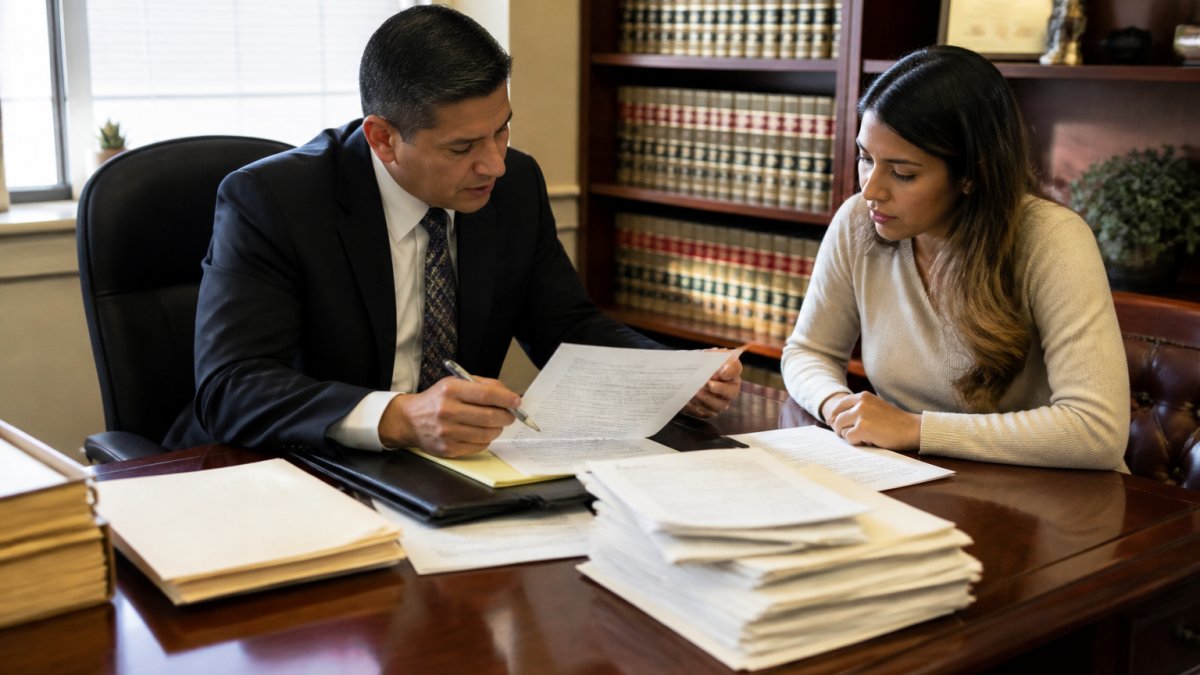
A criminal defense attorney protects your rights in the criminal case, but most are not trained in immigration law and may not understand which convictions trigger deportability or how a plea affects DACA renewal, a gap that criminal defense DACA recipients cannot afford. An attorney with immigration expertise will evaluate every charge for immigration consequences before any plea, negotiate to avoid deportable offenses, explain how sentencing options affect your status, and coordinate with your immigration attorney.
Coordinating Criminal Defense and Immigration Counsel
Your criminal defense attorney and immigration attorney must communicate, they are working toward the same goal: protecting your status and your future. Hire both before entering any plea agreement, give both permission to speak to each other, and have your criminal attorney run proposed pleas by your immigration attorney before accepting.
At Kanu & Associates, P.C., we provide legal support for DACA recipients facing charges in Arizona. We understand the intersection of these two systems and how to navigate both simultaneously.
Protecting Your DACA Status Through Your Defense
Your DACA status is not guaranteed: it must be renewed every two years, and a criminal conviction is one of the few things that can end it immediately.
If you are a DACA recipient facing criminal charges in Arizona, contact Kanu & Associates, P.C. today.
Facing criminal charges as a DACA recipient is urgent: your immigration status depends on the outcome.
Frequently Asked Questions
Can an arrest affect DACA renewal?
Yes. Any criminal charge, even a minor one, can trigger complications during DACA renewal. Immigration authorities review your criminal record as part of the renewal process. A conviction, pending charge, or even certain arrests may make you ineligible to renew. This is why coordinating with both a criminal defense attorney and an immigration attorney immediately after arrest is critical. The outcome of your criminal case directly affects whether you can renew your DACA status.
Should a DACA recipient accept a plea deal before speaking with an immigration attorney?
No. Never accept any plea deal, even a minor one, without consulting an immigration attorney first. Some convictions that seem minor in criminal court can have severe immigration consequences, including deportation. An immigration attorney can review the specific charge and explain how different plea outcomes affect your DACA status and future eligibility. A criminal defense attorney for DACA recipients works with immigration counsel to negotiate plea deals that minimize immigration risk.
Can a DUI affect DACA status or renewal?
Yes. A DUI conviction in Arizona can have serious immigration consequences for DACA holders. Depending on the specifics, such as blood alcohol concentration level and whether it is a first or repeat offense, a DUI may trigger deportation proceedings or make you ineligible to renew DACA. Arizona DUI immigration consequences for DACA recipients can be severe. An immigration attorney must evaluate your case immediately to determine the risk and help your criminal defense attorney negotiate the best possible outcome.
What should a DACA recipient do immediately after a criminal arrest in Arizona?
First, invoke your right to remain silent and do not answer police questions. Request a criminal defense attorney immediately, do not wait. Contact an immigration attorney as soon as possible to assess the deportation risk. Gather all documents related to your DACA status, employment, and community ties. Do not travel outside Arizona or the contiguous United States without explicit legal guidance. Do not sign any documents without attorney review. Do not discuss the arrest on social media or with anyone except your attorneys.