

Last Updated: November 19, 2026
Quick Summary
A criminal defense retainer is an upfront deposit held in a trust account that your lawyer bills against as the case moves forward, so it is a starting balance rather than the total price of your case. The unearned portion is usually refundable, but engagement fees earned on signing often are not.
- Read the scope-of-representation clause to see exactly what work the deposit covers.
- Ask which costs, such as expert witnesses and investigators, are billed outside the retainer.
- Confirm whether your deposit is an advance-fee retainer held in trust or an engagement fee earned on signing.
- A retainer lasts until the work is done or the money runs out, with no universal expiration date.
- Ask each attorney to put the case phase, billing model, extra costs, and refund terms in writing.
Table of Contents
- What a Criminal Defense Retainer Actually Is
- What Does a Lawyer Retainer Fee Cover?
- Is a Lawyer Retainer Fee Refundable?
- How Long Is a Lawyer Retainer Good For?
- Criminal Defense Lawyer Flat Fee vs Hourly
- How to Review and Negotiate a Retainer Agreement
- Comparing Attorney Quotes on Equal Terms
- Ask About Fees at Your First Consultation
- Frequently Asked Questions
What a Criminal Defense Retainer Actually Is
A criminal defense retainer is an upfront deposit a client pays a lawyer before work begins. This guide explains how that deposit works, what it covers, and what to ask before you sign. (Source: American Bar Association’s Model Rules of Professional Conduct)
Here is the part most people get wrong. The retainer is not the total price of your case. It is a starting balance.
Think of it like a prepaid account. The lawyer draws from it for each hour of work. When the balance runs low, you may need to add more money.
That distinction matters because it changes how you budget. A quote that sounds affordable at the consultation can grow once court dates, investigation, and negotiation add up.
What Does a Lawyer Retainer Fee Cover?
A lawyer retainer fee covers the legal work listed in your written agreement. That usually means case review, client meetings, phone calls, document prep, and court appearances. The exact scope depends on the contract, not on a handshake.
Most agreements spell out covered work in a scope-of-representation clause. Read that clause closely. It tells you what the attorney will and will not do for the deposit.
Typical covered items include:
- Reviewing police reports and charging documents
- Meeting with you to build a defense strategy
- Communicating with the prosecutor
- Preparing motions and filings
- Appearing at hearings and pretrial conferences
What the Initial Deposit Does Not Cover
The initial retainer rarely covers everything. Many agreements list extra costs you pay on top of the deposit. These often include:
- Court filing fees and administrative costs
- Expert witness fees, such as accident reconstruction or forensic testing
- Private investigator services
- Transcript and copying fees
- Trial work, if the agreement prices trial separately
Ask which costs come out of the retainer and which are billed separately. This one question prevents most billing surprises.
Is a Lawyer Retainer Fee Refundable?
A lawyer retainer fee is usually partly refundable, specifically, the unearned portion. Money the lawyer has not yet billed for remains client funds. When the representation ends, any unearned balance should be returned to you, often within a set number of days after the final accounting.
The key terms are earned fee and unearned funds. Earned money pays for work already performed and is billed to you. Unearned money sits in a client trust account until the lawyer draws against it. Under the American Bar Association’s Model Rules of Professional Conduct, client funds are generally held in a separate trust account rather than the lawyer’s operating funds.
Advance-Fee Retainer vs. Engagement Fee
Not every upfront payment is refundable, and the label matters:
- Advance-fee retainer (refundable): You deposit money into trust. The lawyer bills against it as work is done. Whatever is left when the case ends comes back to you.
- Engagement fee / true retainer (often nonrefundable): You pay for the lawyer’s availability and for taking the case, and the fee is earned on signing. This money may not be returned even if the case ends early.
- Flat fee (mixed): Some flat fees are earned on receipt; others are deposited in trust and drawn down as milestones are met. The agreement must say which.
Watch out for a large payment labeled a “nonrefundable retainer” that is not tied to specific work. Ask the attorney to point to the clause that says when the fee is earned.
What Triggers a Refund
A refund or final accounting is typically triggered by:
- The case resolving (dismissal, plea, trial verdict, or sentencing)
- The client ending the representation
- The attorney withdrawing with court permission
- The scope of work in the agreement being completed
When any of these happens, the lawyer should provide a final statement showing hours billed, expenses paid, and the remaining trust balance. That balance is returned to you.
Questions to Ask Before You Sign
Use these to pin down the refund terms in writing:
- Is the deposit an advance-fee retainer held in trust, or an engagement fee earned on signing?
- What work must be done before each portion of the fee is considered earned?
- How soon after the case ends will I receive the final accounting and any refund?
- Are expenses paid from the retainer refundable if they are not ultimately used?
- If I replace the attorney, how is the file transferred and the balance accounted for?
State bar rules govern how lawyers handle client funds and resolve fee disputes. If you want the exact procedure for your state, including whether fee arbitration is available, check your state bar association’s official guidance.
How Long Is a Lawyer Retainer Good For?
A lawyer retainer is good until the work it pays for is done or the money runs out. There is no universal expiration date. It lasts as long as the balance covers the legal work in your agreement.
Some retainers are tied to a phase of the case. Others cover the matter through resolution. A few are set up as evergreen retainers, where you replenish the account when it drops below a set level.
Ask these questions before signing:
- Does the retainer cover the case through trial, or only through pretrial?
- What happens when the balance hits zero?
- How often will I get a billing statement?
- Can I end the agreement, and how?
Criminal Defense Lawyer Flat Fee vs Hourly
Criminal defense lawyers bill two main ways: flat fee or hourly. A flat fee charges one set price for a defined scope. Hourly billing charges for each hour worked and draws from your retainer.
Here is how they compare:
| Billing Model | How It Works | Best For | Watch Out For |
|---|---|---|---|
| Flat fee | One price for a set scope | Predictable budgets, clear charges | Scope limits; trial may cost extra |
| Hourly | Pay per hour from retainer | Complex or changing cases | Balance can run low fast |
| Hybrid | Deposit plus flat fee per phase | Cases that may escalate | Harder to compare quotes |
Flat fees give you certainty. You know the number going in. The trade-off is that the scope is fixed, and a trial might sit outside it.
Hourly billing is more flexible. But the total cost depends on how many hours the case takes. A serious felony with investigation and expert work will use more hours than a simple misdemeanor.
How a Retainer Balance Shrinks Over a Case
Picture a retainer account with a starting balance. Each month, the lawyer bills for hours worked and subtracts them. Here is a simple illustration with placeholder numbers:
- Starting retainer balance: $5,000
Your actual costs depend on charge severity, case complexity, and jurisdiction. Ask each attorney for a written estimate.
American Bar Association resources on lawyer billing and client funds
How to Review and Negotiate a Retainer Agreement
Reviewing a retainer agreement comes down to reading five parts and asking about each one. Do this before you sign, not after. The agreement is a contract, and you can negotiate terms.
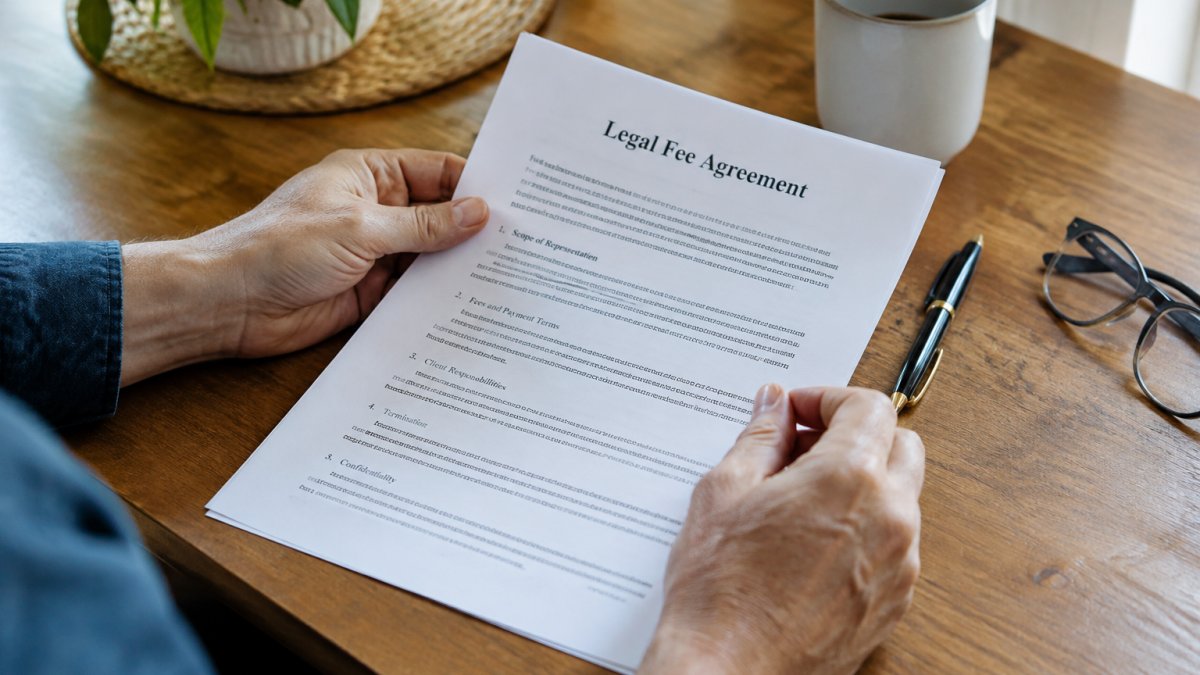
Use this checklist:
- Confirm the scope of representation in plain words
- Check the hourly rate or flat fee and what triggers extra charges
- List every cost billed outside the retainer
- Confirm the refund policy for unearned funds
- Ask for the billing statement schedule and replenishment terms
Negotiation is normal. You can ask about a payment schedule instead of one large deposit. You can ask for a cap on certain costs. You can ask what happens if the attorney withdraws.
If cost is your main worry, it helps to know whether private counsel fits your budget at all. Our guide on whether you can afford a private criminal defense attorney walks through that question before you negotiate.
Comparing Attorney Quotes on Equal Terms
Comparing attorney quotes only works when you compare the same things. Two quotes for “criminal defense” can mean very different scopes. One may cover arraignment only. Another may cover the case through trial.
Ask each attorney to put these in writing:
- What phase of the case the quote covers
- The billing model and rate
- Which costs are extra
- Whether trial is included
- The refund and withdrawal terms
For a deeper look at how each billing method works in practice, our guide on flat fee versus hourly attorney billing explains the mechanics. If you want more detail on flat fee arrangements specifically, read understanding flat fee criminal defense billing.
Our review of deportation defense lawyer cost gives context for criminal and immigration defense pricing.
One more thing many people miss: a criminal charge can affect immigration status. If that is a concern for you, read about criminal charges and naturalization eligibility before you finalize any agreement.
Ask About Fees at Your First Consultation
The first consultation is where you get straight answers about money. Come with questions written down. A good attorney will explain the retainer fee, the billing model, and the extra costs without pressure.
Ask these five questions:
- What does the initial retainer cover, and what does it not cover?
- Is this a flat fee or hourly billing, and what is the rate?
- Which costs are billed outside the retainer?
- What is the refund policy on unearned funds?
- What is the payment schedule and replenishment policy?
If an answer feels vague, ask again. You are entitled to a clear retainer agreement before you pay anything.
A criminal case is stressful enough without billing surprises. Understanding the retainer up front lets you focus on your defense. If you are facing charges and want clear answers about fees and next steps, our team can help.
Frequently Asked Questions
What is a typical retainer fee for a criminal defense attorney?
There is no single number. A criminal defense retainer depends on the charge, the complexity of the case, the expected hours of legal work, and the attorney’s hourly rate. Misdemeanor cases generally require a smaller upfront deposit than serious felonies, which may involve investigation, expert witnesses, and trial preparation. Because pricing is set case by case, ask each attorney for a written fee estimate and an explanation of what the deposit covers before you sign anything.
What expenses might be charged in addition to a criminal defense retainer?
A retainer usually covers attorney time, not the whole case. Costs that often sit outside it include court costs, expert witness fees, investigators, transcripts, and travel for court appearances. Some agreements treat these as additional costs billed separately, while others build an estimate into the deposit. Read the retainer agreement for a list of expenses and ask whether you will be billed for them as they arise or whether they come out of the retainer balance.
Can I get a payment plan for a criminal defense attorney?
Many firms offer a payment schedule that lets you pay the initial retainer in installments, though the attorney typically needs the full deposit before starting substantial work. Ask about replenishment terms too: some agreements require you to top up the retainer when the balance drops below a set amount. If private counsel is out of reach, ask about public defender eligibility or other lower-cost options available in your area.
What happens to my retainer if the case ends early or I change attorneys?
Client funds that have not yet been earned generally must be returned to you. If the case resolves faster than expected, the attorney should provide a final billing statement showing hours worked and refund the unearned balance. The same principle applies if you replace your attorney, though the outgoing lawyer may bill for work already done and for handing over the file. Check the retainer agreement for how refunds and file transfers are handled before you sign.
