


Table of Contents
- Understanding the Naturalization Ceremony as the Final Step
- Before You Arrive: The Notice to Take the Oath of Allegiance
- What to Bring to Your Naturalization Ceremony
- Arrival, Check-In, and Security Screening
- How Long Is the Naturalization Ceremony
- The Ceremony: Taking the Oath of Allegiance and Receiving Your Certificate
- Naturalization Ceremony Dress Code and Guest Attendance
- What Happens After the Naturalization Ceremony
- Frequently Asked Questions
Last Updated: October 4, 2026
Understanding the Naturalization Ceremony as the Final Step
Your naturalization ceremony is the moment you become a citizen. It’s the official conclusion of your journey through the naturalization process. This event brings together the legal paperwork, the interviews, and the background checks into one meaningful day. (Source: U.S. Citizenship and Immigration Services (USCIS))
The naturalization ceremony marks the final step before you receive your Certificate of Naturalization. At this point, you’ve already passed your civics test, your English test, and your background investigation.
What makes the naturalization ceremony significant is that it’s not just administrative. You’ll take the Oath of Allegiance in front of a judge or court official. You’ll likely have family members present. You’ll receive your citizenship certificate.
Kanu & Associates, P.C. helps clients navigate every stage of the naturalization process, including understanding what to expect on ceremony day. Knowing what happens step by step reduces anxiety and helps you prepare properly.
Before You Arrive: The Notice to Take the Oath of Allegiance
You’ll receive a formal Notice to Take the Oath of Allegiance several weeks before your ceremony. This document is also called Form N-445 or your ceremony notice. It contains critical information you must review carefully.
Your notice includes:
- The exact date of your naturalization ceremony
- The specific time you must arrive
- The location where the ceremony will take place
- Instructions about what to bring
- Special instructions or accommodations you requested
Read this notice immediately when it arrives. Mark the date and time on your calendar. If anything on the notice looks wrong, your name is misspelled, the location seems incorrect, or the date doesn’t work for you, contact the court or USCIS office right away. Do not ignore errors.
Some notices include instructions about whether family members can attend. Others may specify that only you should come. Follow these instructions exactly. If you have questions about guest attendance, contact the courthouse before your ceremony date.
What to Bring to Your Naturalization Ceremony
Bringing the right documents is essential. You cannot complete your naturalization ceremony without proper identification.
Required documents include:
- Your Permanent Resident Card (green card)
- A valid photo ID (passport, driver’s license, or state ID)
- Your Notice to Take the Oath of Allegiance (the ceremony notice you received)
- Any documents the notice specifically requested
Some ceremonies ask you to bring additional items. Your notice may request:
- Your naturalization application (Form N-400)
- Medical examination results if you requested a disability waiver
- Evidence of any name changes
- Documentation of any trips outside the country since your green card approval
Do not bring unnecessary items. Leave valuables at home. You’ll go through security screening, so avoid items that could slow down the process.
What to bring to naturalization ceremony preparation also includes having comfortable clothing and arriving early. Plan to be there at least 15 minutes before your scheduled time.
Arrival, Check-In, and Security Screening
You’ll arrive at the courthouse or designated ceremony location on your scheduled date. The check-in process is straightforward but requires attention to detail.
When you arrive:
- Find the correct courtroom or ceremony location using your notice
- Look for the registration table or check-in desk
- Present your Notice to Take the Oath of Allegiance and photo ID
- Staff will verify your identity and confirm you’re on the list
- You’ll receive any final instructions or forms to sign
Security screening happens next. Federal courthouses require all visitors to pass through metal detectors (Security & Electronic Devices Policy | Eastern District of Louisiana). Remove any metal items from your pockets. Place bags on the conveyor belt. Follow staff instructions.
This process typically takes 10-15 minutes. Arrive early to allow time for security without feeling rushed. If you have mobility issues or other accessibility needs, mention this to security staff. They can arrange alternative screening procedures.
After security, staff will direct you to the waiting area or directly into the courtroom. Many ceremonies have a waiting period where all petitioners gather before the judge enters.
How Long Is the Naturalization Ceremony
The entire naturalization ceremony typically lasts between 30 minutes and two hours. The exact length depends on how many people are taking the oath that day.
A typical ceremony includes:
- Opening remarks: 5-10 minutes
- Presentation or video about rights and responsibilities: 10-15 minutes
- Individual or group oath recitation: 10-20 minutes
- Certificate distribution: 10-15 minutes
- Closing remarks: 5 minutes
How long is the naturalization ceremony also depends on whether you’re taking the oath individually or in a group. Group ceremonies with 50+ people naturally take longer than ceremonies with just a few petitioners.
Some jurisdictions hold multiple ceremonies per day. Your specific time slot affects when you’ll finish. If you have work or family obligations, plan for the entire afternoon to be unavailable.
The ceremony itself is not rushed. The judge or Master of Ceremonies takes time to acknowledge each new citizen. This is your moment, and the court recognizes that.
The Ceremony: Taking the Oath of Allegiance and Receiving Your Certificate
Opening Remarks and Presentation
The ceremony begins when the judge or Master of Ceremonies enters the courtroom. Everyone stands. The official welcomes all petitioners and explains what will happen next.
Opening remarks typically cover:
- A greeting to new citizens
- An explanation of the ceremony’s significance
- Information about citizenship rights
- Information about citizenship responsibilities
- Instructions for the oath recitation
Many ceremonies include a video or presentation about what it means to be a citizen. This might cover voting rights, jury duty, the ability to sponsor family members, and the responsibility to follow laws. Pay attention to this section, it reinforces the importance of the moment.
The Master of Ceremonies may also discuss the history of citizenship or the values of the country. This is a formal, respectful part of the process.
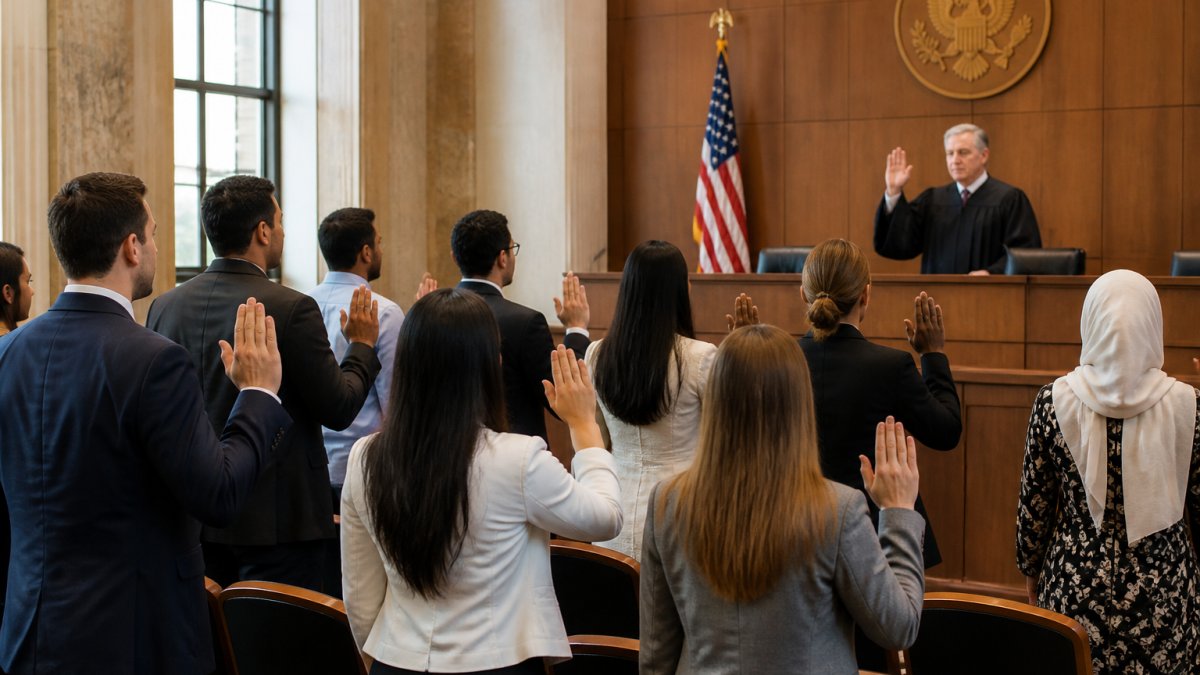
(Source: [Oath of Allegiance](https://www.uscis.gov/citizenship/oath-of-allegiance))
Reciting the Oath of Allegiance
The Oath of Allegiance is the centerpiece of your naturalization ceremony. You will either recite it individually or as a group, depending on how the court structures the ceremony.
The standard Oath of Allegiance states:
“I hereby declare, on oath, that I absolutely and entirely renounce and abjure all allegiance and fidelity to any foreign prince, potentate, state, or sovereignty, of whom or which I have heretofore been a subject or citizen; that I will support and defend the Constitution and laws of the United States of America against all enemies, foreign and domestic; that I will bear true faith and allegiance to the same; that I will bear arms on behalf of the United States when required by the law; that I will perform noncombatant service in the Armed Forces of the United States when required by the law; that I will perform work of national importance under civilian direction when required by the law; and that I take this obligation freely without any mental reservation or purpose of evasion; so help me God.” These solemn words solidify a new civic identity, grounding the individual in a commitment that mirrors the deeper meaning of the pledge of allegiance.
You may request modifications to the oath if you have religious or philosophical objections. If you requested accommodations on your naturalization application, the court will have already arranged these modifications.
Speak clearly and loudly enough for the judge to hear you. This is a formal legal declaration. Your voice matters.
Certificate Review and Receipt
After taking the oath, you’ll receive your Certificate of Naturalization. This is your official proof of citizenship.
Before you leave the courtroom, review your certificate carefully:
- Check your full legal name
- Verify the spelling of your name
- Confirm your date of birth
- Check the certificate number
- Look for the judge’s signature
- Verify the issue date
If you notice any errors, tell the court official immediately. Corrections are easier to make on the spot than later. Do not leave the courthouse with an incorrect certificate.
Once you’ve verified the information, the certificate is yours. This document proves you are a United States citizen. You’ll need it for passport applications, voter registration, and other official purposes.
Keep your Certificate of Naturalization in a safe place. Many people store it with other important documents like birth certificates and passports. Some keep it in a safe deposit box. Do not carry it daily, keep it safe at home.
Naturalization Ceremony Dress Code and Guest Attendance
There is no strict dress code for the naturalization ceremony, but court decorum applies. Dress respectfully and professionally.
Appropriate clothing includes:
- Business casual or formal attire
- Clean, neat clothing
- Closed-toe shoes
- Modest clothing that covers shoulders and knees
Avoid:
- Torn or stained clothing
- Extremely casual wear like athletic clothes
- Clothing with offensive language or imagery
- Hats or head coverings (unless for religious reasons; notify the court in advance)
This is a significant legal proceeding. Your appearance shows respect for the process and the court.
Guest attendance varies by court and ceremony. Some courts allow family members and friends to watch from the gallery. Others restrict attendance to petitioners only. Your Notice to Take the Oath of Allegiance will specify the guest policy.
If guests are allowed, they should also dress respectfully. Guests must arrive early and pass through security screening. They cannot bring large bags or phones into the courtroom in many jurisdictions.
Inform guests about the naturalization ceremony dress code and expectations. This is a formal event, and guest behavior should reflect that.
What Happens After the Naturalization Ceremony
The moment you take the oath and receive your certificate, you are officially a United States citizen. Your naturalization is complete.
Register to vote immediately after your ceremony. Many courthouses have voter registration tables in the hallway outside the courtroom.
Apply for a U.S. passport if you need one. Your Certificate of Naturalization serves as proof of citizenship for passport applications.
Notify relevant agencies of your new citizenship status:
- Your employer (for employment verification)
- Your bank or financial institutions
- Your insurance companies
- Your state’s motor vehicle department (if you want to update your ID)
- Social Security Administration (if needed for benefits or records)
Update your records with Kanu & Associates, P.C. if we represented you during your naturalization.
Store your Certificate of Naturalization safely. Make copies and keep them in separate locations.
Consider sponsoring family members who remain abroad. As a U.S. citizen, you have stronger sponsorship rights than you did as a permanent resident.
Your naturalization ceremony marks a beginning, not an ending. You now have full rights and responsibilities as a citizen.
Becoming a U.S. citizen is a significant achievement. The naturalization ceremony is your official recognition as a member of the American community.
Frequently Asked Questions
How many hours does the naturalization ceremony take?
Most naturalization ceremonies last between 30 minutes and 2 hours, depending on the number of petitioners, the location, and the specific court or USCIS facility conducting the ceremony. Check your Notice to Take the Oath of Allegiance for the scheduled start time and plan to arrive 15-30 minutes early. The actual oath-taking and certificate distribution typically happen within the first hour, though opening remarks, presentations, or guest speakers may extend the ceremony.
What should I bring to my naturalization ceremony?
Bring your Notice to Take the Oath of Allegiance (Form N-445), valid government-issued photo ID, your Permanent Resident Card (green card), and any documents listed in your notice. Do not bring weapons, large bags, or electronic devices unless explicitly permitted. Bring a pen to sign documents if requested. Check your notice for any additional requirements specific to your location, as federal courthouses and USCIS facilities may have different rules.
Is there a dress code for a naturalization ceremony?
There is no strict dress code, but wear clean, respectful clothing as you would for a court appearance or formal event. Business casual or better is appropriate. Avoid clothing with offensive language, gang-related symbols, or excessively casual items like athletic wear. Your appearance reflects respect for the significance of the ceremony and the court. If you have questions about specific clothing, contact the court or USCIS facility listed on your notice.
Do I become a U.S. citizen at the naturalization ceremony?
You become a U.S. citizen at the moment you take the Oath of Allegiance during the ceremony. Once you recite the oath, your naturalization is complete, and you receive your Certificate of Naturalization as proof. This certificate is your official document showing you are now a U.S. citizen. You can use it to apply for a passport, register to vote, or prove citizenship status.