


Table of Contents
- When a Family Visa Denial Changes Everything
- What a Denial Notice Actually Means for Your Case
- The USCIS Visa Denial Appeal Process Explained
- How to File a Motion to Reopen or Reconsider
- What an Immigration Attorney Actually Does After a Denial
- The DIY vs. Attorney Risk Matrix for Family Visa Cases
- Understanding Immigration Attorney Consultation Fees
- Conclusion: Weighing the Real Cost of Going It Alone
- Frequently Asked Questions
Last Updated: September 16, 2026
When a Family Visa Denial Changes Everything
A denial notice from USCIS is not the end of your case, but it changes the stakes. For families pursuing a spouse visa or another family-based green card, whether hiring an immigration attorney is worth it for family visa denials comes down to how much rides on getting the next filing exactly right.
What a Denial Notice Actually Means for Your Case
A denial notice is a written decision explaining why USCIS or a consular officer rejected your application. The grounds cited determine every option available, from refiling to a formal appeal.
Denial vs. Request for Evidence: Two Very Different Problems
A Request for Evidence (RFE) asks for more documentation, your case stays open. A denial closes that case and starts a clock on your options.
Missing the response deadline on an RFE turns a fixable documentation gap into a formal denial. Track the exact date in the notice and calendar it the day you receive it.
The USCIS Visa Denial Appeal Process Explained
The USCIS visa denial appeal process depends on which office issued the decision, and getting that routing wrong is one of the most expensive mistakes an applicant can make. Some denials can be appealed to the Administrative Appeals Office (AAO) in Washington, D.C. Others, particularly consular denials issued abroad, cannot be appealed at all.
Which Denials Can Actually Be Appealed
Most family-based petition denials issued by USCIS, for example, a denied Form I-130, can be appealed to the AAO, as can many denials of adjustment of status, waivers of inadmissibility, and certain employment-based petitions. The AAO reviews the existing record and generally does not accept new evidence, so an appeal is a poor fit when documentation was missing.
What generally cannot be appealed to the AAO:
- Consular officer denials abroad. A consular officer’s refusal is not subject to AAO review. The remedy is usually a request for reconsideration by the consular post, a new interview, or a waiver filing, not an appeal.
- Denials where the decision was discretionary and the officer followed the correct legal standard. The AAO will not substitute its judgment for the officer’s on a discretionary call.
- Denials that USCIS issued without appeal rights. Some decisions, including certain denials of benefits where the regulations do not provide for appeal, must be challenged through a motion instead.
How Form I-290B Works
An appeal to the AAO is filed on Form I-290B, Notice of Appeal or Motion. The same form covers both appeals and motions, which is why applicants sometimes confuse the two. The form must be filed with the office that issued the denial, not directly with the AAO, and the filing fee is set by USCIS and adjusted periodically, so confirm the current amount on the USCIS Form I-290B page before you file.
If your denial notice does not state that you have appeal rights, do not assume you can still file an appeal. Read the notice carefully and confirm the correct remedy before sending anything to USCIS.
When an Appeal Makes Sense and When It Does Not
An appeal makes sense when the denial rests on a legal error, the officer applied the wrong burden of proof, ignored evidence in the record, or misread the regulation. It rarely helps when the underlying facts do not support the visa.
A practical way to decide:
- Legal error, complete record → appeal to the AAO.
- Missing evidence, correct legal standard → motion to reopen or new filing.
- Consular denial abroad → neither; pursue reconsideration, a waiver, or a new petition.
- Discretionary denial with no legal error → appeal is unlikely to succeed; focus on strengthening the underlying case.
How to File a Motion to Reopen or Reconsider
A motion to reopen asks the deciding office to revisit your case based on new facts or evidence not in the original record. A motion to reconsider argues the original decision applied the law incorrectly, based on the same record. Both are filed on Form I-290B with the office that issued the denial and share the same tight filing windows as an appeal.
Motion to Reopen vs. Motion to Reconsider: Choosing the Right Tool
The two motions are not interchangeable, and filing the wrong one is a common and costly error.
| Motion | What It Argues | What You Submit |
|---|---|---|
| Motion to reopen | The decision should be revisited because of new facts or evidence | Affidavits, documents, or records that were not in the original filing |
| Motion to reconsider | The decision was based on an incorrect application of law or policy | A legal brief citing the statute, regulation, or precedent the officer misapplied |
The Day-After-Denial Roadmap
Here is a possible sequence:
- Read the notice the day it arrives. Identify the exact ground of denial and the decision date, that date starts your clock.
- Calendar the deadline immediately. Mark 30 days from the decision date, and 33 days if the notice was mailed. Treat the earlier date as your real deadline.
- Classify the denial. Is it a missing-document, inconsistency, legal-error, or admissibility problem? The category determines the remedy.
- Preserve your status. If you are in the United States and your status is tied to the denied application, unlawful presence can begin accruing, the most time-sensitive issue in the process.
- Gather evidence or build the legal argument. For a motion to reopen, that means documents not submitted before. For a motion to reconsider, the statute, regulation, or precedent the officer misapplied.
- File Form I-290B with the correct office and pay the current fee, or request a fee waiver if you qualify.
- Prepare for the alternative. If the motion is denied, the fallback is usually a new filing, and the record carries forward.
If your denial involved an inconsistency between the petitioner’s and beneficiary’s statements, a motion to reopen is usually stronger than a motion to reconsider. New, corroborating evidence, joint financial records, communication logs, affidavits from people who know the relationship, can address the inconsistency directly in a way a legal brief cannot.
::: Integrating these specific pieces of evidence into a coherent narrative requires a personalized legal defense strategy to ensure that every submission effectively counters the government’s stated grounds for denial.
What This Costs and Who Can Afford It
Filing fees for Form I-290B are set by USCIS and change periodically, so confirm the current amount before filing. Fee waivers are available for some benefit types based on income, but not every form, and a waiver request does not pause the deadline.
The Emotional Cost of a Second Denial
A second denial hits families harder than the first. The first is a shock; the second often arrives after months of gathering evidence, paying fees, and rearranging work and childcare for interviews, and it can trigger a grief response that makes rational decision-making harder.
The motion to reopen or reconsider is not a second chance at the same argument. It is a targeted response to a specific defect in the original decision. If you cannot name the defect in one sentence, you are not ready to file.
What an Immigration Attorney Actually Does After a Denial
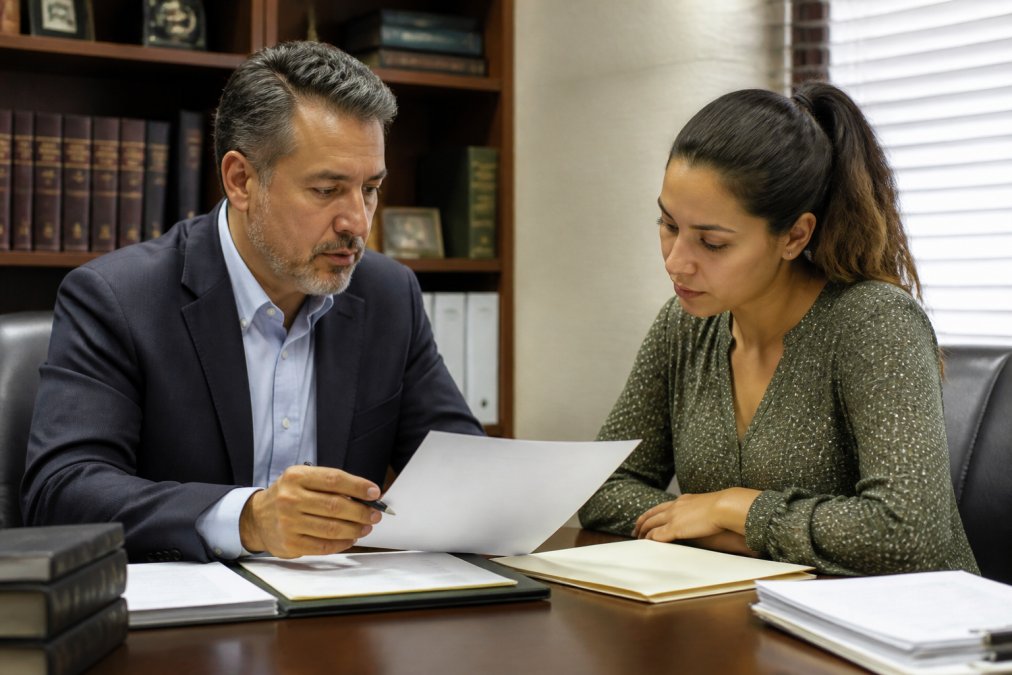
An immigration attorney reviews the denial notice, identifies the actual grounds, and maps the options against your goals and timeline.
Rebuilding the Application Package With Legal Counsel
Rebuilding starts with the record. An attorney audits the original application package, cross-checks it against the denial grounds, and identifies what was missing, inconsistent, or mischaracterized.
The most common rebuild mistake is resubmitting the same package with one document added. If the denial cited inconsistency, adding a document does not fix it. The narrative itself has to change.
The DIY vs. Attorney Risk Matrix for Family Visa Cases
The decision is rarely all-or-nothing. It depends on the denial’s complexity, your tolerance for delay, and what a second denial would cost your family.
| Case Situation | DIY Risk Level | Attorney Value |
|---|---|---|
| Single missing document, clear RFE | Low | Moderate |
| Inconsistency between petitioner and beneficiary | High | High |
| Prior denial with same grounds | Very high | Very high |
| Admissibility or criminal history issue | Severe | Critical |
| Consular denial abroad | High | High |
Understanding Immigration Attorney Consultation Fees
Immigration attorney consultation fees vary widely by firm, case complexity, and whether the attorney charges hourly or a flat fee. Some firms offer a low-cost or free initial consultation; others charge a set fee.
To evaluate cost honestly, ask three questions:
- Is the fee flat or hourly, and what triggers additional charges?
- What is included: filing, interview prep, and any appeal or motion work?
- What happens to the fee if the case is denied again?
Compare attorneys on total case cost, not the consultation fee. The consultation is a rounding error next to a second denial.
Conclusion: Weighing the Real Cost of Going It Alone
The hardest part of a family visa denial is not the paperwork. It is the uncertainty about whether the next filing will work, and whether you can afford to find out the hard way. For simple, well-documented cases, a careful applicant can sometimes manage alone. For anything involving prior denials, admissibility concerns, or consular processing, the risk of a second denial usually outweighs the cost of representation.
Frequently Asked Questions
Can an immigration attorney help if my family visa application was denied?
Yes. An experienced immigration attorney can review your denial notice to identify the specific ground of inadmissibility or filing error that caused it, then determine whether an appeal, motion to reopen, or refiling is the strongest path forward. Legal counsel can also help you gather the additional documentation USCIS requested, prepare a stronger application package, and represent you in consular processing if your case moves to that stage.
What are the most common reasons family visa petitions get denied?
Common reasons include insufficient proof of a bona fide relationship, missing or inconsistent documentation, failure to meet the petitioner’s income requirements, prior immigration violations, and inadmissibility issues such as unlawful presence or criminal history. Filing errors, such as using an outdated form or omitting required signatures, also lead to denials. An attorney can spot these issues before you file or help you correct them after a denial notice arrives.
How do I appeal a family visa denial with USCIS?
The USCIS visa denial appeal process typically starts with filing Form I-290B, Notice of Appeal or Motion, within the deadline stated on your denial notice. Depending on the case type, your appeal may go to the USCIS Administrative Appeals Office or to the Board of Immigration Appeals. Because deadlines are strict and the legal standard is high, consulting an immigration attorney before filing is strongly recommended to avoid a second denial.
What is the difference between a visa denial and a Request for Evidence?
A Request for Evidence (RFE) means USCIS needs more documentation before making a decision. You have a set window to respond, and your case stays open. A denial is a final decision that closes your case unless you appeal, file a motion to reopen or reconsider, or submit a new petition. An RFE is a warning sign; a denial is a stop sign. Both require prompt, careful action.
Is it worth hiring an attorney for a family visa application before a denial happens?
Hiring an immigration attorney before you file can prevent the filing errors and documentation gaps that lead to denials in the first place. An attorney reviews your application package, flags admissibility concerns, and prepares you for the consular interview. For straightforward cases, self-filing may work. For cases involving prior denials, criminal history, or complex family relationships, early legal representation is often the difference between approval and years of procedural delays.
A second denial can push your family’s timeline back by years. Kanu & Associates, P.C. reviews denial notices, identifies the actual grounds, and builds a case strategy tailored to your situation. Our team specializes in immigration law and serves clients throughout Arizona and New Mexico. Get started with Kanu & Associates, P.C. and move forward with a clear plan for your family’s case.