


Table of Contents
- What Is an Immigration Bond Hearing?
- Who Appears in the Courtroom
- Immigration Bond Hearing Timeline: From Detention to Decision
- Factors for Immigration Bond Eligibility and Detention Status
- Immigration Bond Hearing Evidence: What You Can Present
- The Immigration Judge’s Role and Decision
- What Happens If Your Bond Is Denied
- Preparing Yourself: Common Mistakes to Avoid
- Frequently Asked Questions
Last Updated: September 26, 2026
What Is an Immigration Bond Hearing?
An immigration bond hearing is a court proceeding where a detained individual appears before an Immigration Judge to determine whether they should be released from custody while their immigration case proceeds. This critical juncture often determines whether someone awaits their removal proceedings in detention or remains free in their community.
The hearing itself is not a trial on the merits of the immigration case. Instead, it focuses solely on custody status: whether the person poses a flight risk or danger to the community, and whether they have ties that would encourage them to return for future court dates. The Immigration Judge has broad discretion in deciding bond amounts and conditions of release.
An immigration bond hearing happens first and shapes everything that follows, it is not a trial on the merits of your immigration case. If you’re detained, this is your immediate priority.
Who Appears in the Courtroom
An immigration bond hearing brings together the detained individual, an Immigration Judge (who presides and decides custody status and bond terms), an ICE officer or attorney representing the government, and court staff.
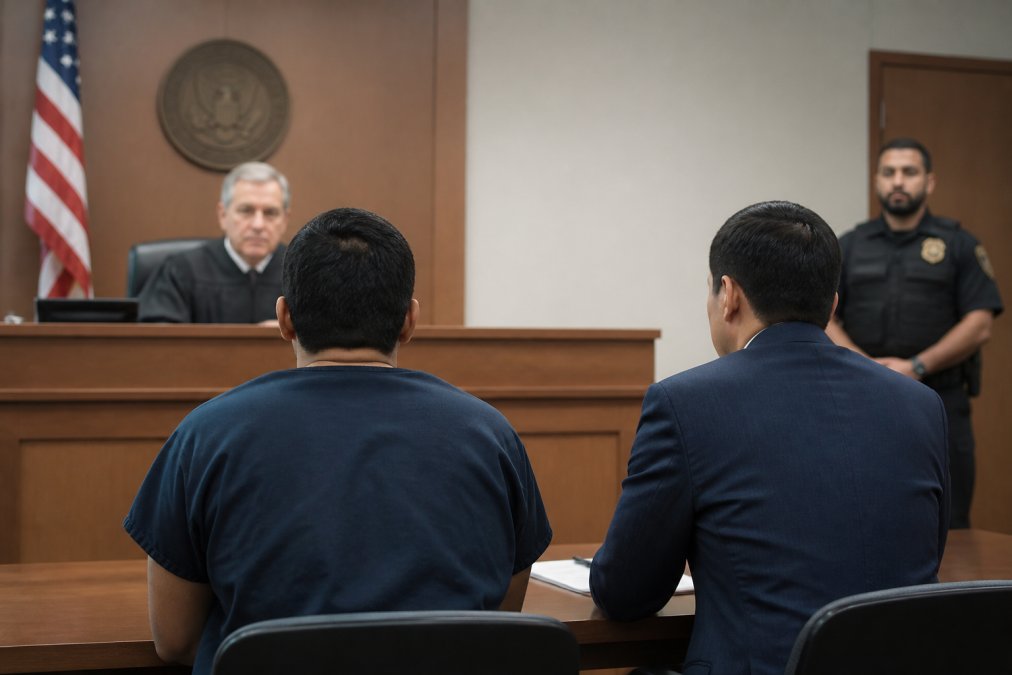
The ICE officer or attorney presents evidence about the individual’s background, immigration history, and criminal record. The detained individual can testify, present witnesses, and submit documents supporting their case for release.
Legal representation is critical: your attorney speaks on your behalf and cross-examines government witnesses. Pro se individuals must present their own evidence and arguments without understanding courtroom procedures or legal standards.
Immigration Bond Hearing Timeline: From Detention to Decision
Pre-Hearing Timeline
Most people are taken into ICE custody after arrest or apprehension. Within 72 hours, ICE must charge them formally or release them; if charged, they’re transferred to a detention facility.
The immigration bond hearing typically occurs within 7 to 14 days of detention. You receive a hearing notice 1 to 3 days in advance with the date, time, location, and case number.
During the Hearing
The hearing usually lasts 30 minutes to 2 hours. The Immigration Judge may issue a decision immediately or issue a written order within a few days.
Post-Decision: The Critical Hours
If bond is granted, the Immigration Judge issues an order with the bond amount and conditions. The detained person remains in custody until the bond is actually posted.
Bond Payment and Receipt
You have two options: (1) Cash Bond: Pay the full amount directly to ICE by cashier’s check, money order, or wire transfer. Once verified (24 hours), a receipt is issued proving the bond was posted. (2) Bond Surety: Use a licensed bail bond company, which charges a non-refundable fee (typically 10-15%) and posts the bond on your behalf, faster but costlier.
The Release Process
After the bond receipt is issued or surety bond is filed, ICE processes the release in 24 to 48 hours (longer on weekends or holidays).
The detained person is released with an “Order of Release” document listing the bond amount, conditions, release date/time, next court date, and contact information. Keep this document, you need it to prove your legal status while your case proceeds.
Timeline Summary
- Day 1: Arrest/apprehension
- Within 72 hours: Formal charging or release
- Days 2-14: Transfer to detention facility and bond hearing scheduling
- Bond hearing date: Judge issues decision (same day or within days)
- Within 24 hours of bond posting: Release paperwork processed
- Within 48 hours of bond posting: Actual release from facility
Weekends and holidays delay every step. If your bond hearing is Friday and bond is granted, you may not be released until Monday or Tuesday. Have bail funds ready immediately after the hearing.
Factors for Immigration Bond Eligibility and Detention Status
Not everyone is eligible for bond. Certain criminal convictions, prior deportations, and security concerns can make someone ineligible.
If you are eligible, the judge weighs two primary factors: flight risk and danger to the community. These are not about guilt or innocence in your immigration case. They’re about whether you’re likely to disappear and whether you pose a safety threat while free.
Flight Risk and Danger to the Community
Flight risk asks whether you will appear for future immigration court dates. The judge considers your ties to the community, employment, family relationships, and history of immigration violations. Deep roots and stable employment lower flight risk; a history of evading immigration authorities raises it.
Danger to the community focuses on criminal history. Minor offenses rarely result in a danger finding, but violent crimes, drug trafficking, or repeated criminal behavior can lead the judge to conclude you’re a danger.
The burden of proof varies: if you have a serious criminal conviction, the government must prove by clear and convincing evidence that you’re a danger; otherwise, you may need to prove you’re not a danger.
Evidence of Ties to the Community
Ties to the community are your strongest argument for release: employment, family relationships, property ownership, community involvement, educational enrollment, or local medical treatment.
Bring documentation: employment letters with position and start date, family documents establishing relationships, letters from employers or community leaders, and medical records showing ongoing local treatment.
Immigration Bond Hearing Evidence: What You Can Present
Evidence includes documents (employment letters, lease agreements, birth certificates of U.S. citizen children, medical records, school enrollment, utility bills, bank statements) and witness testimony supporting your ties to the community.
Witness testimony is powerful. A family member, employer, or community leader testifying that you are reliable, employed, and rooted in the community can influence the judge. Brief witnesses on questions about how long they’ve known you and why they believe you’ll appear for future court dates.
You can testify on your own behalf about your family, employment, and reasons for staying in the community. Be honest and direct; exaggeration or lies will hurt your credibility.
The Immigration Judge’s Role and Decision
The Immigration Judge works for the Executive Office for Immigration Review (EOIR) and applies immigration law to make a custody determination. (Source: ICE’s detainee processing guidelines)
The Immigration Judge has discretion in setting bond amounts and conditions. They are not bound by the government’s recommendation and may grant bond at a lower amount or deny it entirely.
The judge’s decision must be based on whether you are a flight risk or danger to the community, not your immigration status, the strength of your deportation case, or personal sympathy.
After hearing the evidence, the Immigration Judge announces their decision. Conditions may include electronic monitoring, travel restrictions, or regular check-ins with ICE.
What Happens If Your Bond Is Denied
If the Immigration Judge denies bond, you remain in detention, but this is not final.
You can request bond redetermination if circumstances have materially changed: a new job, a family member willing to post bond, a medical condition, or new evidence of community ties.
The burden shifts on redetermination. After the first hearing, you must show by clear and convincing evidence that changed circumstances warrant release. This is harder than the initial hearing standard.
You can also appeal the Immigration Judge’s decision to the Board of Immigration Appeals (BIA). An appeal challenges whether the judge applied the law correctly, not whether you agree with the decision. Appeals take time and require legal expertise.
Many people in this situation consult with an immigration attorney to explore these options. Kanu & Associates, P.C. is committed to understanding your specific goals and explaining your options clearly so you can move forward with confidence.
Preparing Yourself: Common Mistakes to Avoid
The biggest mistake is appearing unprepared. People often show up to bond hearings without documents, without witnesses, and without understanding what the judge will ask. This almost always results in denial or a higher bond amount.
General Preparation Mistakes
Do not lie or exaggerate. If you claim you have a job but don’t, the government will expose this. If you overstate your family ties, the judge will notice inconsistencies. Your credibility is everything in a bond hearing.
Do not assume the judge knows your background. Bring documents that establish who you are, what you do, and why you belong in the community. Don’t rely on verbal explanations alone.
Do not ignore the hearing notice.
Remote/VTC Hearing Mistakes (Now Standard)
Technical Failures: Do not assume your internet connection will work. Test your device, camera, and microphone the day before. Use a stable Wi-Fi connection or wired internet if possible. Mobile hotspots often drop or buffer, which looks unprofessional and can cause you to miss critical questions. Have a backup device and location ready.
Frequently Asked Questions
How long does it take to get a bond hearing in immigration court?
The timeline varies based on detention facility location and case complexity. Detained individuals typically receive a hearing notice within 7 to 10 days of ICE custody. However, the actual hearing date may be scheduled weeks or months later depending on court schedules and case load. Your legal representative can request expedited scheduling in certain circumstances, particularly if you have significant ties to the community or if there are humanitarian concerns.
What factors does an Immigration Judge consider when setting a bond amount?
The Immigration Judge evaluates flight risk, danger to the community, and ties to the community. Key factors include your employment history, family relationships in the country, property ownership, criminal record, prior immigration violations, and length of residence. The judge also considers whether you have a valid passport, history of appearing for court proceedings, and community support. These factors collectively determine both eligibility for release and the appropriate bond amount or conditions of release.
What evidence should I bring to an immigration bond hearing?
Bring documents proving community ties: employment letters, lease or mortgage documents, family relationships, tax returns, and letters of support from employers, family, or community members. Include proof of medical treatment, school enrollment for children, and any evidence of established residence. If you have a criminal history, bring documentation of rehabilitation or character references. Organize documents chronologically and have copies available. Your legal representative can advise on specific evidence that strengthens your case based on your circumstances.
Can the Immigration Judge deny my bond even if I have strong community ties?
Yes. While community ties are important, the Immigration Judge has discretionary authority to deny bond if you are deemed a flight risk or danger to the community. Certain criminal convictions, prior immigration violations, or lack of documentation can outweigh community ties. If bond is denied, you have the right to request bond reconsideration if there is a significant change in circumstances. Legal representation significantly improves your chances of presenting the strongest possible case for release.